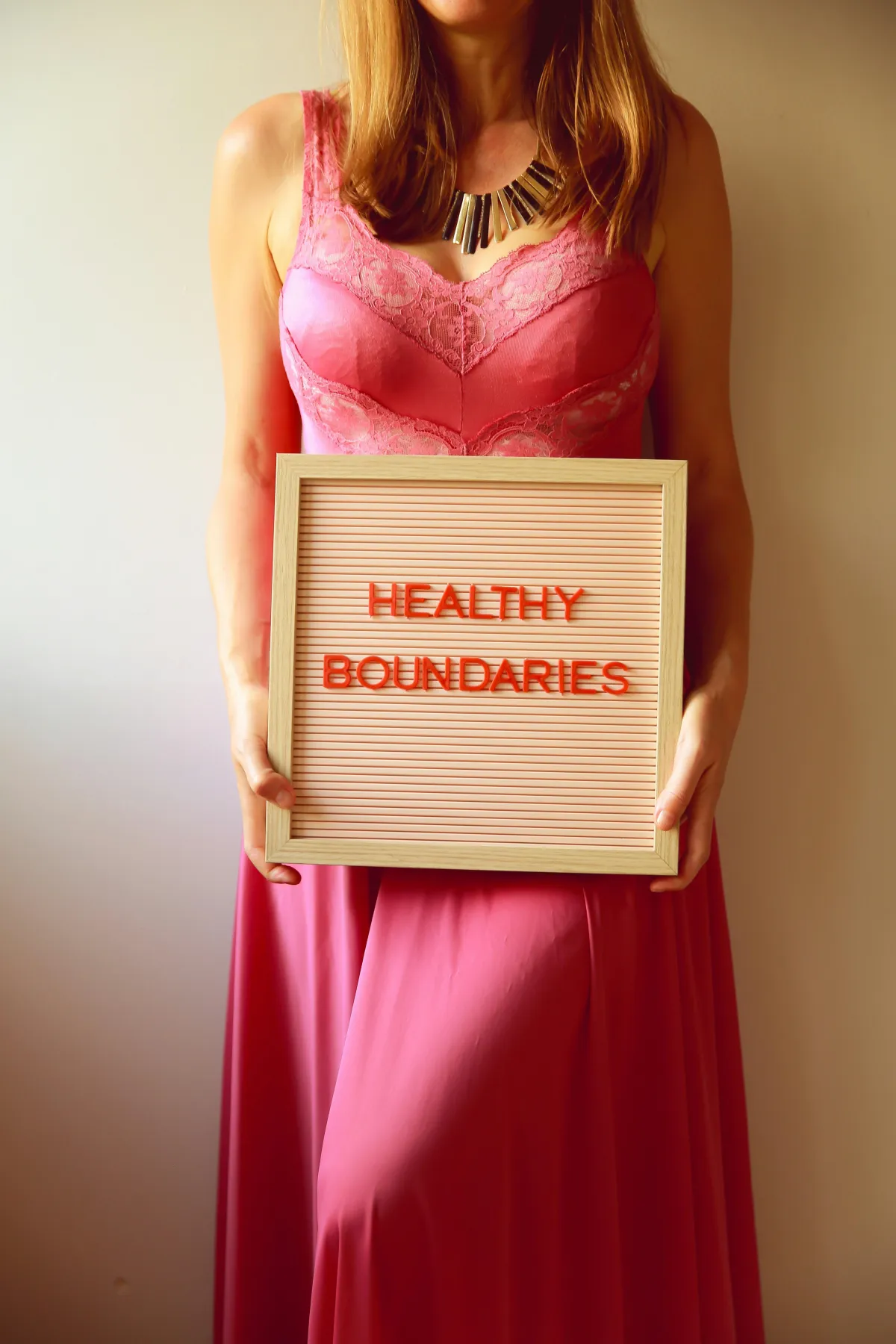
Why Boundaries Feel Scary — And How to Set Them Anyway
Why Boundaries Feel Scary — And How to Set Them Anyway
You can feel the "no" forming before the other person even finishes their sentence. And then you hear yourself say, "yeah, sure, that works."
Does any of this sound familiar? You agree to plans, favors, or extra work before you've actually checked in with yourself. You rehearse a boundary in the shower and lose your nerve the moment it matters. You over-explain or apologize when you do manage to say no. You've been told you're "too nice" — and some days it doesn't feel like a compliment. You worry that setting a limit will make someone love you less.
It's not that you don't know what you need. It's not that you're weak, or a pushover, or bad at "communication."
The Good News?
Boundaries aren't a personality trait you either have or don't. They're a skill — and if this one feels hard right now, it's usually because your nervous system learned, at some point, that setting a limit wasn't safe.
What's Actually Happening
Therapist Nedra Glover Tawwab, author of the bestseller Set Boundaries, Find Peace, defines a boundary simply as an expectation or need that helps you feel safe and comfortable in a relationship. That's it. Not a wall. Not a punishment. A way of telling someone what you need so the relationship can actually hold both of you.
For a lot of people, though, a boundary doesn't register as safe and comfortable — it registers as risk. If you grew up fawning your way through conflict, your body learned that keeping other people comfortable was the price of staying connected to them. I wrote more about that specific pattern in The Fawn Response — the two tend to travel together, since fawning is what happens when you can't access a boundary in the moment, and boundaries are often the skill that gives you another option.
So when you try to set a limit now, some part of you still braces for the relationship to end. That's not a flaw in your character. It's a mismatch between what your body learned to expect and what's actually true in your life today.
Isn't Setting a Boundary Just... Being Difficult?
This is the fear underneath almost every boundary conversation I have with clients: that saying what you need will make you the difficult one.
Brené Brown, in Dare to Lead, puts it plainly: "Clear is kind. Unclear is unkind." Vague, resentment-fueled compliance isn't actually kinder to the people in your life — it just delays the cost and usually raises it. The friend who eventually finds out you've been quietly overwhelmed for months. The partner who can sense you're checked out but doesn't know why. A clear boundary, stated early and without a paragraph of justification attached, is often the more respectful move — for them and for you.
Boundaries also aren't one-size-fits-all. Tawwab's framework breaks them down by type — time, energy, emotional space, material resources — a useful reminder that "I need better boundaries" is rarely one problem. It's usually a specific, nameable one: I need to stop taking work calls after 7pm. I need a family member to stop commenting on my body. I need to say no to a project without an apology attached.
How Therapy Helps With This
This is where nervous-system-informed therapy is different from a worksheet on assertive communication. Rather than just handing you scripts, we work with the part of you that flinches the moment you imagine disappointing someone — using approaches like somatic work and attachment-focused therapy to help your body learn, gradually, that a boundary doesn't have to mean abandonment.
Over time, that means: feeling the urge to over-explain — and choosing a shorter, clearer sentence instead. Setting a limit without the adrenaline spike that used to come with it. Relationships that can actually hold your needs, not just your availability. Fewer moments of quiet resentment because you said yes when you meant no.
Take the First Step
You don't have to overhaul every relationship overnight, and you don't have to get the wording perfectly clear the first time you try.
If you're tired of rehearsing sentences you never actually say, I'd be honored to support you. This is the first of several posts I have planned on boundaries — there's a lot more I want to say on this one, so keep an eye on this space.
Contact me — I'd love to hear from you
Sara Nied, LMHC
Sara Nied is a Licensed Mental Health Counselor in Washington State, offering telehealth therapy for individuals, couples, and families using nervous-system-informed, attachment-based approaches.
